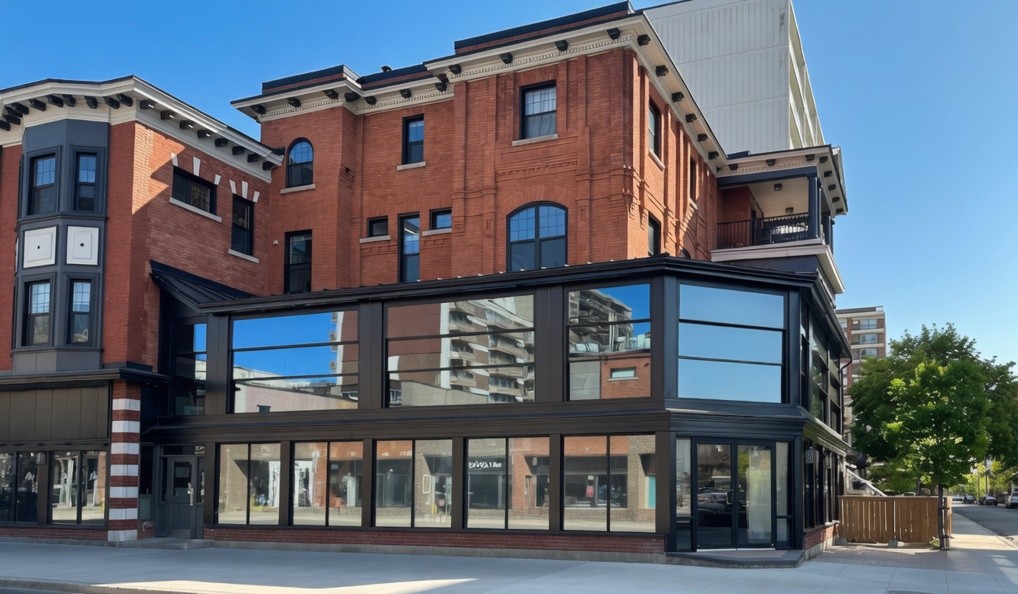


Roadwork and construction can change the appearance of a commercial property surprisingly quickly. A storefront that normally stays presentable between scheduled window cleanings may suddenly develop a layer of fine dust, dried splash, or gritty residue only days after service.
For Ottawa businesses, this can become especially noticeable during the warmer months when road reconstruction, utility work, sidewalk improvements, excavation, building renovations, and new development are underway across commercial areas.
The solution is not necessarily to permanently increase window cleaning frequency.
Construction is often temporary. A more practical approach is to temporarily adapt the commercial window cleaning schedule according to the type of work nearby, the amount of dust being generated, the distance between the work and the building, weather conditions, and how visible the affected windows are to customers.
Once construction activity decreases, the business can return to its normal maintenance schedule.
Construction Can Change a Property’s Normal Cleaning Needs
A commercial window cleaning schedule should reflect the conditions surrounding the property.
Under ordinary circumstances, a business might deal primarily with:
- Traffic-related residue
- Fingerprints
- Rain spotting
- Seasonal pollen
- Winter salt
- General urban dust
Construction can introduce significantly more airborne material.
Excavation, concrete work, demolition, cutting, grading, and vehicle movement can create dust that settles on nearby surfaces.
A cleaning schedule that worked perfectly before construction began may therefore become temporarily inadequate.
Roadwork Can Affect Businesses Even Without Direct Construction on Their Property
A business does not need to be renovating its own building to experience construction-related window problems.
Roadwork nearby can affect surrounding commercial properties through:
- Dust
- Dirt
- Increased truck traffic
- Excavation
- Temporary gravel surfaces
- Mud
- Water spray
- Construction equipment
- Changes in vehicle circulation
Stores located directly beside the work are usually the most exposed, but dust can travel beyond the immediate construction area depending on conditions.
Fine Dust Can Create a Gradual Haze
Construction dust is not always dramatic.
Sometimes it appears as a fine layer that gradually settles across the glass.
From inside the business, employees who see the windows every day may not immediately notice the change.
From outside, however, the storefront can begin to look dull.
Large windows can make this particularly noticeable because even a light film spread across a broad surface affects the overall clarity of the façade.
Rain Can Make Construction Dust More Noticeable
Rain does not necessarily solve a dusty-window problem.
When water mixes with existing dust, the resulting residue can dry into visible spotting or streaking.
A storefront that looked merely dusty before rainfall may appear considerably more marked afterward.
Businesses should therefore inspect windows after significant weather changes rather than assuming rain has cleaned the glass.
Wind Direction Can Influence Which Windows Get Dirty
Construction exposure is not always uniform across a building.
Windows facing the active work may accumulate significantly more dust than those on another side.
Wind can also move airborne material toward one elevation while leaving another relatively protected.
This is one reason businesses should avoid automatically increasing the frequency of every window.
The most affected glass can be prioritized.
Distance From the Work Matters
A business immediately beside excavation or road reconstruction may experience different conditions from one several blocks away.
The amount of buildup can depend on:
- Distance
- Type of construction
- Wind
- Traffic patterns
- Physical barriers
- Building orientation
- Frequency of construction vehicle movement
Rather than assuming nearby construction automatically requires a particular cleaning interval, businesses should monitor how quickly their own glass is being affected.
Not Every Construction Project Creates the Same Problem
Different projects can produce different types of exterior buildup.
Road resurfacing may create dust and traffic-related grime.
Excavation can expose large quantities of soil.
Building renovation may generate fine construction particles.
Sidewalk replacement can place active work directly beside storefronts.
Utility projects may involve digging, temporary surfaces, and heavy equipment.
The cleaning strategy should reflect what is actually happening around the property.
Start With a Baseline Cleaning
When a major construction project is expected nearby, businesses may benefit from beginning with reasonably clean windows.
This creates a baseline.
Once construction activity begins, management can more easily see how quickly new residue appears.
If the windows become visibly dirty much sooner than usual, the temporary maintenance schedule can be adjusted accordingly.
Monitor Conditions During the First Few Weeks
It can be difficult to predict exactly how roadwork will affect a particular storefront.
Instead of immediately doubling or tripling cleaning frequency, businesses can monitor the first phase of construction.
Questions to consider include:
- How quickly is dust becoming visible?
- Which windows are most affected?
- Are entrance doors worse than usual?
- Does rainfall create heavy spotting?
- Are construction vehicles passing directly in front of the property?
- Are customer-facing displays becoming harder to see?
These observations provide a better basis for changing the schedule.
Temporarily Increase Frequency When Necessary
If windows that normally remain presentable for several weeks begin looking dirty after a much shorter period, temporarily increasing service can make sense.
The important word is temporarily.
Construction conditions should not automatically become the permanent maintenance standard.
When roadwork ends or moves farther away, the business can reassess its needs and return to a more appropriate normal interval.
Focus on Customer-Facing Windows First
During construction, not every pane deserves equal priority.
For many businesses, the most important glass includes:
- Main storefront windows
- Entrance doors
- Promotional windows
- Reception-area glass
- Windows facing pedestrian traffic
- Street-facing panes
Less visible or protected windows may remain on their normal schedule.
This targeted approach can help businesses maintain presentation without unnecessarily cleaning the entire property more frequently.
Entrance Glass Can Become a Double Maintenance Challenge
Construction does not replace the normal sources of entrance dirt.
Customers still leave fingerprints.
Employees still enter and exit.
Deliveries still arrive.
At the same time, construction can add dust and exterior residue.
This means entrance doors can experience both high-touch marks and environmental buildup simultaneously.
During active roadwork, businesses should inspect entrance glass more frequently than they normally would.
Storefront Businesses Have More at Stake
Street-facing retailers, restaurants, cafés, salons, and other businesses often depend heavily on storefront presentation.
Potential customers may see the windows before anything else.
Construction already creates visual disruption around the property through fencing, machinery, temporary barriers, and road closures.
Allowing storefront glass to become heavily coated with dust can add another layer of visual clutter.
Maintaining the windows helps businesses preserve control over the part of the exterior they can manage.
Retailers Should Protect the Visibility of Displays
Retail stores frequently use their windows to promote:
- Products
- Seasonal collections
- Sales
- New arrivals
- Special events
- Brand imagery
Construction dust can make these displays less clear from outside.
Businesses investing time in visual merchandising should inspect the glass regularly while nearby work is underway.
If buildup begins reducing visibility, the cleaning schedule can be temporarily adjusted.
Restaurants and Cafés Should Watch Large Front Windows
Restaurants and coffee shops often use large windows to showcase the atmosphere inside.
Customers may see dining areas, seating, lighting, and activity through the glass.
Construction dust can create a dull film that reduces this visibility.
For businesses with patios, the issue can become even more noticeable because customers spend extended periods close to exterior windows.
Salons and Spas May Notice Dust More Quickly
Beauty and wellness businesses often maintain carefully designed storefronts.
Clean lines, bright interiors, attractive signage, and polished presentation are part of the customer experience.
Fine construction dust can be especially noticeable against that type of storefront.
During nearby roadwork or redevelopment, these businesses may benefit from temporarily placing front windows and entrance glass on a higher-priority schedule.
Medical and Professional Offices Should Maintain the Arrival Experience
Construction can make access to an office more complicated.
Customers may encounter detours, temporary walkways, fencing, or altered parking.
Maintaining the entrance and customer-facing glass can help preserve a professional arrival experience despite the surrounding disruption.
The business may not control the roadwork, but it can continue maintaining its own property.
Furniture and Home Décor Stores Should Protect Showroom Visibility
Large showroom windows can collect substantial amounts of construction dust simply because of their size.
When those windows are being used to display furniture, lighting, or décor, clarity becomes particularly valuable.
Retailers can prioritize primary display panes during construction while leaving less visible glass on a longer interval.
Grocery Stores and Pharmacies Can Experience Heavy Traffic During Construction
Essential businesses may continue receiving substantial customer traffic even when nearby streets are being rebuilt.
Their entrance doors can therefore collect normal fingerprints while exterior surfaces accumulate construction residue.
A maintenance plan should account for both sources rather than focusing only on dust.
Downtown Ottawa Businesses Can Face Multiple Sources of Buildup
Downtown commercial properties may experience roadwork alongside normal urban conditions.
Depending on the location, windows can be affected by:
- Construction dust
- Vehicle traffic
- Pedestrian activity
- Deliveries
- Public transit
- Weather
- General street residue
When several factors occur simultaneously, the normal cleaning interval may need temporary adjustment.
Centretown Businesses Should Watch Street-Facing Glass
Centretown contains many businesses positioned close to sidewalks and streets.
When road or utility work occurs nearby, there may be relatively little distance between construction activity and storefront glass.
Street-facing panes and entrances can therefore become priority areas during active work.
Protected side or rear windows may not require the same increase in frequency.
The Glebe’s Pedestrian Storefronts Need Clear Visibility
Businesses in pedestrian-oriented commercial areas may continue receiving people on foot even while construction is underway.
Customers can view storefront windows from only a few feet away.
Fine dust, streaks, and dried construction residue are easier to notice at that distance.
Maintaining customer-facing glass can help businesses preserve storefront presentation during disruptive projects.
Westboro Businesses Can Adjust Around Road and Development Activity
Commercial areas can experience different forms of construction over time, from road improvements to individual property redevelopment.
Rather than relying on a fixed annual schedule, businesses can treat active construction as a temporary environmental factor.
The service plan can increase while exposure is high and return to normal afterward.
Construction Vehicles Can Create Additional Road Dust
The construction site itself is not always the only source of buildup.
Heavy trucks moving to and from the site can carry dirt onto surrounding roads.
Traffic can then redistribute that material.
Businesses located along construction access routes may therefore experience increased dust even if the active project is not directly beside them.
Temporary Gravel Surfaces Can Increase Dust
Some road projects involve temporary gravel or unfinished surfaces.
Dry conditions and vehicle movement can generate significant dust.
If a storefront faces these areas, buildup can occur much faster than under normal paved-road conditions.
Once paving is complete, the maintenance requirement may decrease again.
Mud Can Become a Problem During Wet Construction Periods
Dry weather creates dust.
Wet weather can create mud.
Construction vehicles may carry soil onto roads and parking areas, where passing traffic redistributes dirty moisture.
Lower commercial windows can then experience splash and spotting.
Businesses should pay particular attention to ground-level glass during wet phases of construction.
Sidewalk Construction Can Put Work Directly Beside Storefronts
Sidewalk replacement or streetscape improvements can bring construction extremely close to businesses.
In these situations, storefront glass may be only a short distance from cutting, digging, concrete work, or equipment.
The business may need a more aggressive temporary cleaning schedule during the most active phases.
Once work moves away from the storefront, frequency can be reduced.
Building Construction Next Door Can Create Longer-Term Exposure
A major development may last much longer than a small road repair.
Businesses beside new construction can experience changing conditions over many months.
The level of dust may also change as the project progresses.
Excavation may create one type of exposure.
Structural work may create another.
Exterior finishing may reduce the amount of dust.
A maintenance plan should therefore be reviewed periodically rather than set once for the entire project.
Renovating Your Own Commercial Property Requires a Different Approach
When construction is happening inside or directly on the business property, window cleaning should be coordinated with the renovation timeline.
Cleaning too early may simply result in the windows becoming dirty again immediately.
Businesses should communicate with contractors and identify when major dust-producing work is expected to finish.
A detailed final window cleaning can then become part of the transition from construction site to customer-ready property.
Avoid Final Cleaning Before Dust-Producing Work Is Complete
If cutting, sanding, demolition, masonry, or other dusty work is still underway, a full final cleaning may be premature.
The glass could require another service shortly afterward.
Instead, temporary maintenance can keep critical customer-facing areas reasonably presentable while construction continues.
The more complete cleaning can be scheduled at an appropriate stage near project completion.
Grand Reopenings Need Special Planning
Businesses reopening after renovations often focus on:
- Interior cleaning
- Product displays
- Furniture
- Signage
- Staff preparation
- Marketing
Exterior windows should be included in that checklist.
Construction residue on the storefront can undermine the visual impact of an otherwise refreshed property.
Scheduling window cleaning close to reopening can help ensure the exterior matches the improvements inside.
New Signage and Window Cleaning Should Be Coordinated
Construction projects sometimes include new exterior signs or window graphics.
The timing of these installations matters.
Businesses can coordinate signage services and window maintenance so the surrounding storefront is appropriately prepared.
After installation work is complete, the glass can be inspected again for fingerprints, dust, or installation-related marks.
Construction Can Affect Interior Glass Too
Most roadwork affects exterior surfaces, but building renovations can create interior dust.
Glass doors, office partitions, lobby windows, and interior-facing surfaces may develop fine residue.
Businesses undergoing renovation should therefore distinguish between exterior construction exposure and interior construction dust when planning final cleaning.
Don’t Forget Window Frames and Surrounding Areas
Dust does not settle only on the centre of the glass.
Frames, sills, and surrounding surfaces can collect material too.
If these areas remain heavily dusty, wind or rain can move residue back toward recently cleaned glass.
The exact scope of service should be discussed when construction-related buildup is unusually heavy.
Property Managers Should Identify the Most Exposed Tenants
Roadwork may not affect every storefront in a plaza equally.
A tenant facing the road can experience substantial dust while a business around the corner remains relatively protected.
Property managers can identify:
- Road-facing units
- Corner units
- Entrances near construction access
- Windows close to temporary gravel
- Units beside active development
These tenants can receive additional attention while the rest of the property follows its normal schedule.
Retail Plazas Can Use a Temporary Construction Service Tier
A coordinated plaza maintenance plan can temporarily add a higher-priority category for construction-affected glass.
For example:
Construction Priority: Storefronts directly facing active work.
High-Touch Priority: Main customer entrances.
Standard Storefronts: Windows experiencing ordinary commercial conditions.
Protected Glass: Side or secondary windows with limited exposure.
When construction ends, the temporary category can be removed.
Multi-Location Businesses Should Adjust Only the Affected Locations
A company with several Ottawa locations does not need to change its entire window cleaning program because one branch is near roadwork.
Instead, maintenance can remain consistent elsewhere while the affected location receives temporary additional service.
This allows the business to maintain brand standards without creating unnecessary costs across the entire portfolio.
Property Inspections Become More Important During Construction
Conditions can change quickly around an active construction project.
Businesses and property managers can include windows in routine exterior inspections.
They should look for:
- Increasing dust
- Dried muddy splash
- Heavy spotting
- Reduced storefront clarity
- Dust around frames
- Entrance buildup
These observations help determine whether the temporary schedule remains appropriate.
Take Note of How Quickly Buildup Returns
One useful way to evaluate frequency is to observe the time between professional cleaning and noticeable new buildup.
If windows remain presentable for several weeks, the current schedule may be sufficient.
If heavy construction dust returns within a few days, additional temporary service may be justified.
Once that buildup begins taking longer to return, the schedule can be reduced again.
Weather Should Influence Temporary Scheduling
Construction activity and weather interact.
A dry, windy period may generate substantial airborne dust.
Heavy rain can reduce airborne dust temporarily but create muddy splash and spotting.
The business does not need to react to every weather change, but recurring patterns can help guide service timing.
Avoid Cleaning Immediately Before Predictable Heavy Dust
If a business knows particularly dusty work is scheduled directly outside the storefront the following day, it may make sense to coordinate service accordingly.
Communication with property managers, contractors, or construction notices can help businesses avoid unnecessary timing conflicts.
The goal is to make cleaning effective rather than simply frequent.
Customer Events May Require an Extra Cleaning
Sometimes a promotion or important event occurs while construction is still active.
Businesses may have:
- Grand openings
- Customer appreciation events
- Product launches
- Seasonal promotions
- Open houses
In these situations, an additional cleaning shortly before the event can help improve the storefront even if another regular service is already scheduled later.
Photography Is Another Reason to Adjust Timing
Businesses may need professional photographs while construction is ongoing.
If exterior or interior window-facing images are planned, scheduling window cleaning shortly beforehand can help produce a better visual result.
This can be particularly valuable for website photography, advertising campaigns, and Google Business Profile updates.
When Should a Business Return to Its Normal Schedule?
Once construction activity decreases, businesses should reassess rather than automatically continuing the temporary frequency.
Signs that normal scheduling may be appropriate again include:
- Dust returns more slowly
- Temporary gravel has been paved
- Excavation has finished
- Construction vehicles are less frequent
- Road access has returned to normal
- Storefront glass remains presentable longer
The maintenance plan can then transition back to the normal baseline.
A Post-Construction Cleaning Can Provide a Final Reset
After a major road or building project ends, a more thorough window cleaning can help reset the property.
This is particularly useful when windows have experienced months of changing conditions.
The business can then evaluate its glass under normal environmental exposure and establish the appropriate ongoing frequency.
How Much Should Cleaning Frequency Increase During Construction?
There is no universal formula.
The appropriate adjustment depends on:
- Distance from construction
- Type of work
- Amount of dust
- Wind exposure
- Road conditions
- Customer traffic
- Window size
- Storefront visibility
- Weather
- Business type
Some businesses may only need one additional cleaning.
Others directly beside long-term construction may benefit from a temporary recurring increase.
The condition of the glass should guide the decision.
Signs Your Normal Schedule Is No Longer Enough
Businesses may want to temporarily adjust service when:
- Windows become visibly dusty long before the next scheduled cleaning
- Displays are difficult to see clearly from outside
- Rain repeatedly turns dust into heavy spotting
- Entrance glass develops both fingerprints and construction residue
- Lower windows receive muddy road splash
- Staff repeatedly request unscheduled cleaning
- Promotional materials lose visibility
- Customer-facing glass looks noticeably dull
These are practical signs that environmental conditions have changed.
Why a Flexible Maintenance Plan Works Better
Commercial properties do not exist in controlled environments.
Roadwork begins.
Buildings are renovated.
Weather changes.
Traffic patterns shift.
A rigid cleaning schedule cannot always respond effectively to these changes.
A flexible maintenance program establishes a normal baseline while allowing temporary adjustments when unusual conditions occur.
For Ottawa businesses dealing with construction, that approach can help maintain presentation without committing to unnecessary long-term service.
A Practical Construction-Period Window Cleaning Strategy
Businesses can use a straightforward process:
- Establish the normal baseline. Know how frequently the property typically requires window cleaning.
- Identify construction exposure. Determine which elevations and entrances are closest to the work.
- Monitor early buildup. Observe how quickly dust and residue return.
- Increase service selectively. Prioritize customer-facing and heavily exposed glass.
- Coordinate around construction activity. Avoid unnecessary cleaning immediately before predictable dusty work when possible.
- Schedule a post-construction reset. Clean accumulated residue after major work concludes.
- Return to the normal schedule. Reduce frequency once environmental conditions stabilize.
This provides structure without assuming every construction project requires the same response.
Keep Your Ottawa Storefront Presentable During Construction
Nearby roadwork may be outside a business owner’s control, but the condition of the storefront does not have to be.
A flexible commercial window cleaning schedule can help businesses respond to dust, road residue, muddy splash, construction traffic, and changing environmental conditions while keeping attention on the glass customers see most.
Ottawa Window Cleaning provides professional commercial window cleaning and recurring maintenance for retailers, restaurants, cafés, professional offices, medical businesses, retail plazas, property managers, multi-location companies, showrooms, and other commercial properties throughout Ottawa.
Cleaning schedules can be adjusted according to construction activity, road exposure, customer traffic, seasonal conditions, storefront configuration, and the rate at which buildup actually returns.
Learn more about Commercial Window Cleaning:
Explore Window Cleaning Maintenance:
Learn more about Signage Services:
Request a free estimate:
Or call 613-327-8828.
Frequently Asked Questions
Should Ottawa businesses clean their windows more often during nearby construction?
Sometimes. If construction causes visible dust or residue to return significantly faster than normal, a temporary increase in cleaning frequency can help. The schedule can be reduced again after conditions improve.
Does every window need more frequent cleaning during roadwork?
Not necessarily. Windows facing construction may experience much more buildup than protected side or rear glass. Businesses can prioritize the most exposed and customer-facing areas.
Will rain remove construction dust from commercial windows?
Rain may remove some loose material, but it can also mix with existing dust and leave spotting or streaked residue after drying. The actual condition of the glass should determine whether cleaning is needed.
Should windows be cleaned while a business is undergoing renovations?
Customer-facing glass can be maintained during renovations when necessary, but the final detailed cleaning is generally best coordinated with the construction timeline so major dust-producing work does not immediately dirty freshly cleaned windows.
What should businesses do after nearby roadwork is completed?
A post-construction cleaning can provide a useful reset. The business can then monitor how quickly normal environmental buildup returns and resume an appropriate regular maintenance schedule.
Can retail plazas adjust cleaning only for construction-facing tenants?
Yes. A coordinated plan can temporarily increase service for units directly exposed to construction while protected storefronts remain on their normal schedules.
How do I know when to return to the normal cleaning schedule?
If construction activity has decreased and windows remain presentable for their usual period again, the temporary increased frequency may no longer be necessary. The schedule should reflect current conditions rather than conditions from earlier phases of the project.